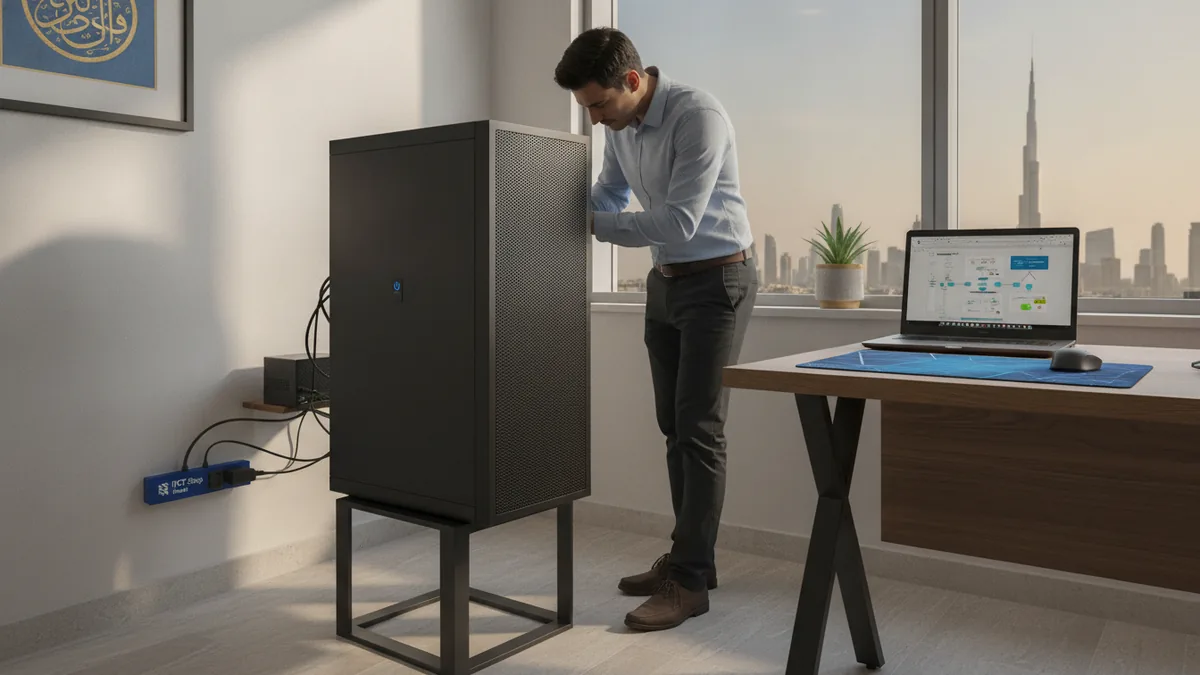
Many small offices in Dubai run on a mix of laptops, a shared drive on someone's desktop and a few cloud subscriptions. That works until files go missing, backups turn out to be weeks old or the accounting software becomes too slow on a shared PC. A small office server fixes these problems, but it is easy to overbuy. This guide explains when a small office needs a server, whether a NAS, tower or rack server fits better, which specifications matter and how refurbished hardware keeps the cost sensible.
Do you need a server at all?
A server makes sense when you need at least one of these:
- Central file storage with proper user permissions.
- Reliable local backups of laptops and PCs.
- Line-of-business software that must run locally (accounting, ERP, design or CAD data, CCTV recording).
- User accounts and policies managed in one place (Active Directory).
- A few virtual machines for different applications.
If everything you use is already in the cloud and you only need file sharing, a cloud service or a small NAS may be enough.
NAS, tower or rack server?
| Option | Best for | Limits |
|---|---|---|
| NAS | File sharing and backups for 5–20 users | Limited for databases and virtual machines |
| Tower server | Offices without a rack; file server, domain controller, accounting software, light virtualisation | Takes floor space; less dense than rack |
| Rack server | Offices with a network cabinet or growth plans | Needs a rack, more noise, better suited to a separate room |
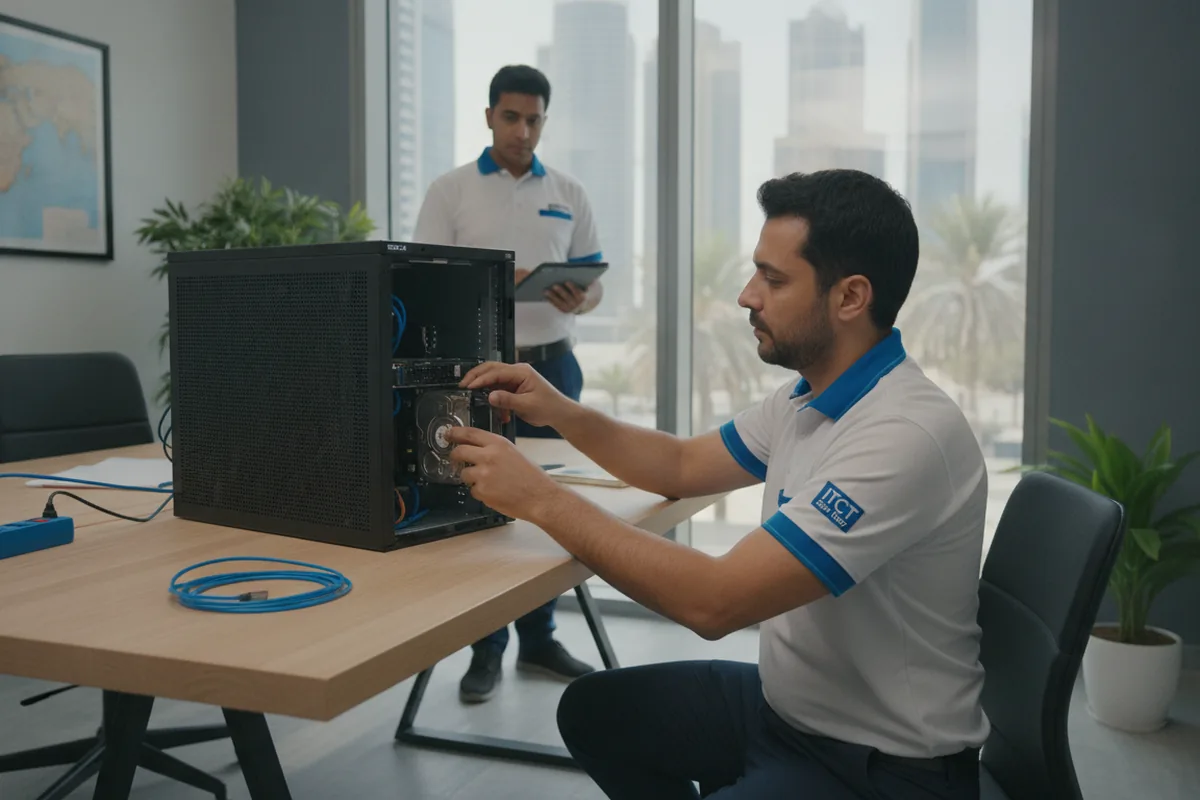
Typical tower choices include the Dell PowerEdge T-series (such as T340, T440, T350), HPE ProLiant ML-series (such as ML110, ML350) and the compact HPE MicroServer. If you have a rack, entry 1U servers or the popular Dell R740 and HPE DL380 are common; we compare those in Dell R740 vs HPE DL380 Gen10.
Specifications that matter for a small office
- CPU: one modern Xeon is plenty for file serving and a few virtual machines.
- Memory: 32 GB is a sensible start for a file and domain server; 64 GB or more if you run several virtual machines. Check compatible modules in our server RAM compatibility guide.
- Storage: SSDs for the operating system and active data, larger HDDs for archives, in RAID 1, 5, 6 or 10 depending on capacity and protection needs.
- RAID controller: a hardware controller with cache for business data.
- Redundant power supplies if downtime is costly.
- Remote management (iDRAC or iLO) so issues can be handled without being on site.
- Network: at least dual 1 GbE; 10 GbE if large files move often, with a switch to match.
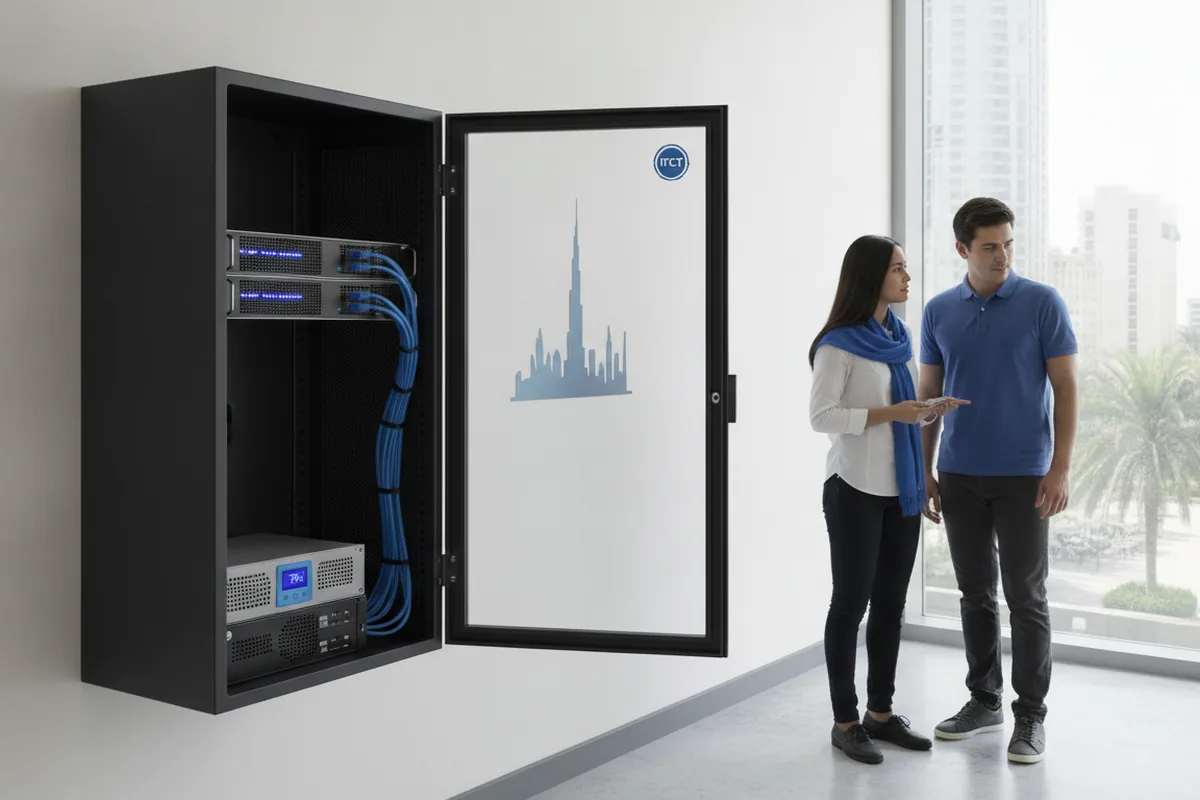
Don't forget the rest of the setup
- UPS: power cuts and fluctuations damage drives and data.
- Backup: RAID is not a backup. Keep a separate copy, ideally one off-site or in the cloud, and test restores.
- Cooling and placement: a ventilated spot or small cabinet, away from dust and direct heat; Dubai summers are hard on equipment in closed rooms.
- Licences: Windows Server and client access licences, or a hypervisor, need budgeting.
Why refurbished makes sense for small offices
Small office workloads rarely need the latest server generation. A refurbished enterprise server from a recent generation gives redundant power, hardware RAID and remote management at a fraction of the new price. Buy from a supplier that tests every unit, wipes drives and offers a clear warranty; see what a refurbished server warranty should cover and our range of refurbished servers in Dubai. ITCT can configure CPU, memory, drives and RAID to your office's needs before delivery.
Frequently asked questions
What is the best server for a small office?
For most offices without a rack, an entry tower server such as a Dell PowerEdge T-series or HPE ProLiant ML-series. If you only need file sharing and backups, a NAS may be enough.
NAS or server for a small business?
A NAS is simpler for files and backups. Choose a server if you need a domain controller, databases, local business software or virtual machines.
How much RAM does a small office server need?
Around 32 GB for file and domain services; 64 GB or more for several virtual machines.
Is a tower server noisy?
Tower servers are designed to be quieter than rack servers and usually suit an office environment, though a separate ventilated space is still better.
Is a refurbished server reliable for a small office?
Yes, when it comes from a supplier that tests components, wipes drives and provides a warranty.