
Dubai is one of the world's busiest hubs for enterprise IT hardware. Servers, storage, switches and spare parts flow through its free zones and warehouses to buyers across the Middle East, Africa, Central Asia and beyond. A large share of that trade is refurbished and used enterprise equipment: servers retired from data centres after a few years, tested, repaired where needed and resold at a fraction of the price of new hardware. For the right workloads, a refurbished server is one of the smartest purchases an IT team can make. For the wrong ones, or from the wrong seller, it can become an expensive problem.
This guide explains how the refurbished server market in Dubai works, what grades and terms mean, how to check quality, which models are commonly available, what to ask a supplier and how to avoid the most common mistakes.
Why buy refurbished servers?
Enterprise servers are built to run for many years, but large organizations often replace them on a fixed cycle of three to five years for accounting, warranty or standardisation reasons. Much of that hardware still has years of reliable life left. Buying it refurbished offers several advantages:
- Lower cost: refurbished servers typically cost a fraction of the equivalent new configuration, freeing budget for storage, networking or more capacity.
- Immediate availability: popular models are often in stock in Dubai warehouses, avoiding long lead times for new hardware.
- Matching existing estates: organizations running a fleet of a specific generation can expand or maintain it with identical hardware.
- Spare parts: refurbished units and parts keep older but stable systems running long after the manufacturer stops selling them.
- Sustainability: extending hardware life reduces electronic waste.
When refurbished is the right choice, and when it is not
| Good fit | Think twice |
|---|---|
| Virtualisation hosts, file servers, backup targets, web and application servers | Workloads that need the latest CPU features or newest GPU generations |
| Development, test and lab environments | Environments that require manufacturer warranty and support contracts by policy |
| Expanding an existing fleet of the same generation | Projects where power and cooling are very constrained, since older generations are less efficient |
| Disaster recovery and secondary sites | Long-term deployments beyond the remaining firmware and security update life of the model |
Understanding refurbished grades and terms
There is no single global standard, so terms vary between sellers. Always ask what each term means for the specific supplier, but these are the common categories:
- New / factory sealed: unused and in original packaging, sometimes surplus stock.
- New open box: unused but the packaging has been opened.
- Refurbished: used equipment that has been tested, cleaned, had faulty parts replaced and firmware updated.
- Used / pulled: removed from a working system and usually tested for basic function, with less reconditioning.
- Grade A / B / C: cosmetic grading, from near-perfect to visible wear. Cosmetic grade does not always reflect functional quality.
What to check before you buy
Configuration in detail
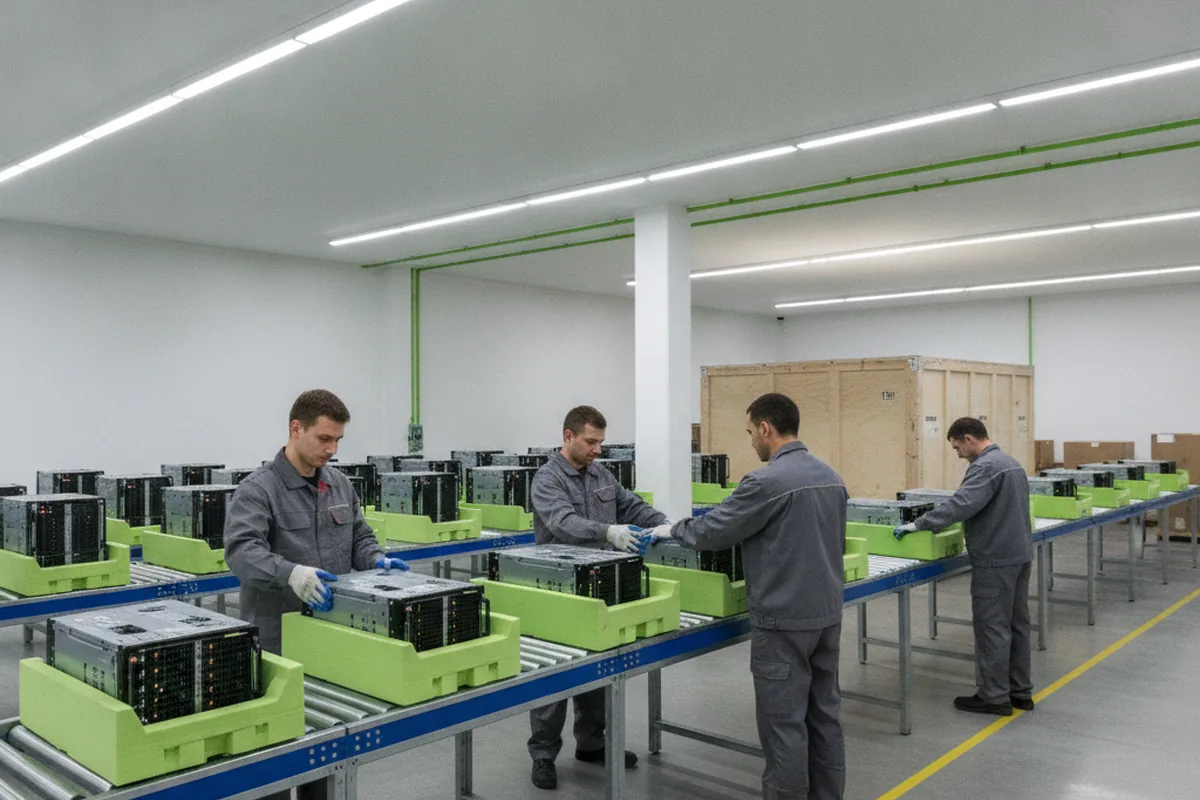
Ask for the exact configuration: model and generation, number and model of processors, memory size and module layout, drive bays and form factor, RAID controller, network cards, power supplies and rail kit. Two servers with the same model name can differ significantly in value depending on these components.
Testing and burn-in
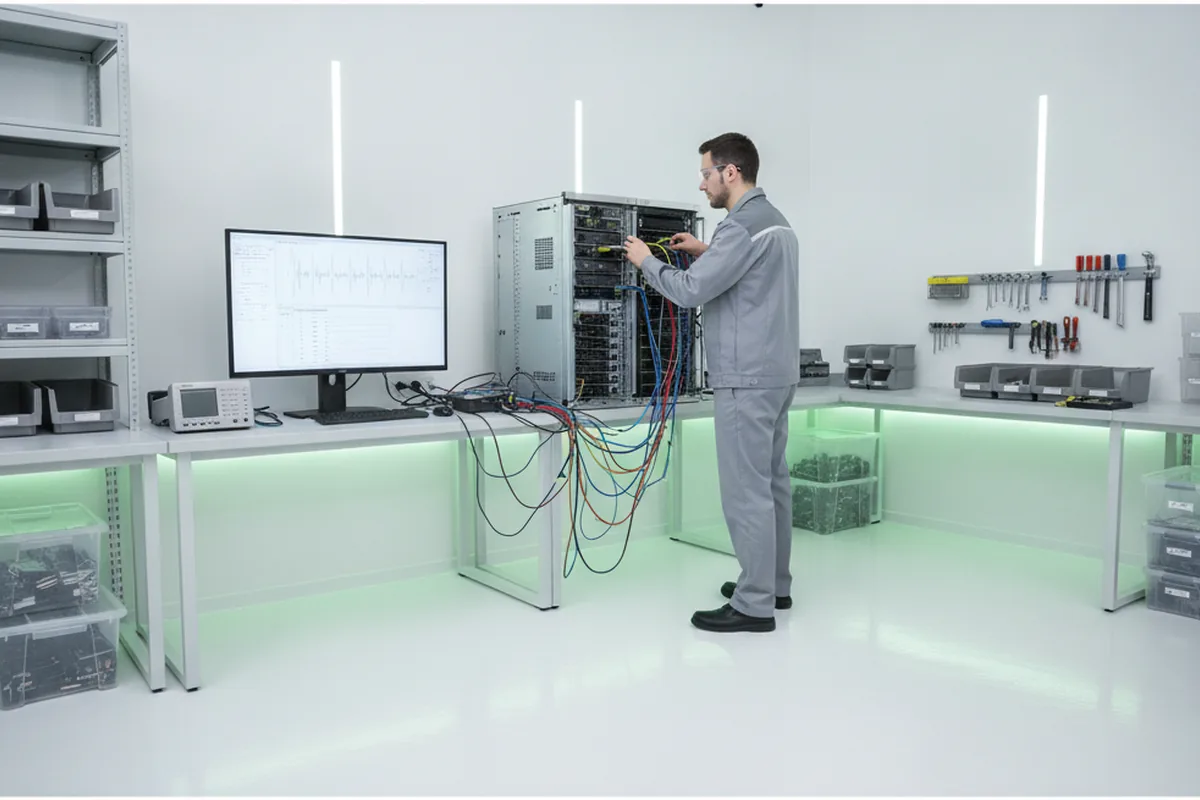
Ask how the server was tested. A good refurbisher runs memory and storage tests, checks all fans and power supplies, reviews the system event log and runs the server under load for a period of time before shipping.
Firmware and management
Check whether BIOS and management firmware (such as iDRAC on Dell or iLO on HPE) have been updated, and whether any management licences are included. Make sure previous configurations and credentials have been reset.
Drives and data
Confirm whether drives are included, their condition and power-on hours, and how previous data was erased. Reputable sellers provide certified data wiping or supply servers without drives.
Warranty and returns
Refurbished equipment usually comes with a seller warranty rather than a manufacturer warranty. Ask how long it lasts, what it covers, how quickly replacement parts are shipped and who pays for return shipping.
Export and shipping
If the server is leaving the UAE, confirm export documentation, packaging standards for heavy equipment, and any export control requirements for the destination country.
Commonly traded server models
The refurbished market in Dubai is dominated by mainstream rack servers from major brands, especially generations that were widely deployed in enterprise data centres. Commonly requested families include Dell PowerEdge (for example R640, R740 and R750), HPE ProLiant (DL360 and DL380 Gen9, Gen10 and Gen10 Plus) and Lenovo ThinkSystem. Availability changes weekly as large batches are decommissioned and resold, which is why searching across many warehouses at once saves so much time. For a direct comparison of two of the most popular models, see our guide to Dell R740 vs HPE DL380 Gen10.
Rack, tower or blade?
- Rack servers (1U and 2U) are the most common in the refurbished market. They fit standard 19-inch racks, are easy to service and have the widest choice of parts. Choose 1U models such as the Dell R640 or HPE DL360 for density, and 2U models such as the R740 or DL380 for more drives, expansion cards and GPUs.
- Tower servers such as the HPE ML350 or Dell T-series suit small offices without a rack or dedicated server room. They are quieter and simpler to deploy but less dense.
- Blade servers pack many compute nodes into a shared chassis. They make sense when you are expanding an existing blade estate, but buying a new chassis just for a few blades rarely pays off.
Typical configurations and what to upgrade
Refurbished servers in Dubai are often listed in a "base" configuration, for example a dual-socket Xeon Gold server with 32 GB of memory and two small SAS drives. These listings make prices look attractive, but most production workloads need more. Common upgrades include:
- Memory: virtualisation and databases usually need far more than the base 32 GB. Populate memory evenly across channels for best performance.
- Storage: replace small spinning disks with enterprise SSDs or NVMe drives, and confirm the drive caddies are included.
- RAID or HBA controller: choose a controller that matches your storage design, especially for software-defined storage.
- Network: add 10 GbE or 25 GbE cards if the base model only has 1 GbE ports.
- Power supplies: make sure two power supplies are installed for redundancy, with the right wattage for your configuration.
Always compare quotes on the final configuration you need, not the base listing.
Warranty, returns and delivery norms in the UAE
Practices differ between sellers, but many established refurbishers in the UAE offer a seller warranty, often in the range of several months to a year, short return windows for dead-on-arrival units, and delivery across the emirates within one or two working days for in-stock items. Some also ship across the GCC and beyond. Get the warranty length, what counts as a fault, replacement turnaround and who pays return shipping in writing before you pay.
The true total cost
When budgeting, add these items to the server price:
- VAT at 5% for purchases within the UAE, unless an exemption applies
- Rail kits, cable management arms and power cables
- Drive caddies and any additional drives
- Management licences, such as iDRAC Enterprise or iLO Advanced, if you need full remote console
- Operating system and virtualisation licences
- Shipping, insurance and export documentation for international delivery
- Power and cooling over the server's life, which is higher for older generations
How pricing works
Refurbished server prices depend mainly on generation, processor model, memory and storage configuration, cosmetic grade and current supply. Prices move with the market: when a large batch of a model arrives, prices drop; when stock runs low, they rise. That is why it is worth comparing several sources rather than accepting the first quote, and why quotes are usually valid only for a short time.
Finding the right supplier in Dubai
Dubai has hundreds of IT hardware traders, from small shops to large warehouse operators. Traditionally, buyers call or message dozens of suppliers, wait for replies and compare inconsistent quotes. A better approach is to search verified warehouse stock directly and request quotes only from suppliers who actually have the part. That is what ITCT is built for: search across verified Dubai warehouses by part number or model and get matched with the suppliers who have it in stock.
Matching the server to the workload
| Workload | What to prioritise | Common refurbished choice |
|---|---|---|
| Virtualisation (VMware, Hyper-V, Proxmox) | Cores, lots of memory, redundant power, 10 GbE | 2U dual-socket, such as R740 or DL380 Gen10 |
| File and backup server | Drive bays, capacity, reliable controller | Storage-dense 2U, such as R740xd |
| Web and application servers | Density, moderate memory, efficiency | 1U dual-socket, such as R640 or DL360 Gen10 |
| Small office server | Quiet operation, no rack needed | Tower, such as HPE ML350 |
| Lab, test and development | Lowest cost per core | Previous-generation rack servers |
| Inference or graphics workloads | GPU support, power supplies, cooling | 2U with GPU enablement kit |
Refurbished vs new: a three-year cost comparison
Consider a mid-sized company that needs four virtualisation hosts. Buying the current generation new typically costs several times more than a well-configured previous generation bought refurbished. Over three years, the refurbished option uses somewhat more power per unit of performance and may need a spare part or two, but the upfront saving is usually far larger than these extra running costs. The new option makes more sense when the hosts must run for five years or more, when the organisation needs the manufacturer's warranty for compliance, or when workloads need the newest CPU features. Many buyers split the difference: new hardware for the most critical systems, refurbished for development, backup and secondary sites.
A practical buying checklist
- Write down the workload, required cores, memory, storage and network speed.
- Choose the server family and generation that fits, not just the cheapest listing.
- Search several warehouses by model and part number and request comparable quotes.
- Ask for the full configuration, test report, firmware status and warranty in writing.
- Confirm rails, cables, caddies and licences are included.
- Check delivery time, VAT and export documents if shipping abroad.
- On arrival, run your own burn-in test during the warranty's dead-on-arrival window.
Questions to ask every supplier
- What exactly is the configuration, including part numbers?
- Is it refurbished, used or new, and what does your grading mean?
- How was it tested, and can you share the test report?
- Are firmware and management controllers updated and reset?
- How were drives wiped, or are drives excluded?
- What warranty do you offer, and how fast are replacements shipped?
- Can you ship internationally and provide export documents?
Common mistakes
- Comparing quotes by model name only, ignoring processor, memory and storage differences.
- Buying the cheapest unit without a test report or warranty.
- Forgetting rail kits, power cables, drive caddies and licences.
- Ignoring power consumption and the cost of running older generations.
- Choosing a generation that is close to the end of firmware and security updates for long-term use.
Frequently asked questions
Are refurbished servers reliable?
Enterprise servers are designed for long service lives. Properly tested and refurbished units from reputable suppliers are reliable for most business workloads, especially when bought with a seller warranty.
Do refurbished servers come with a warranty?
Usually a seller warranty rather than a manufacturer warranty. Length and coverage vary, so confirm the terms and replacement times before buying.
Which refurbished servers are most popular in Dubai?
Mainstream rack servers such as Dell PowerEdge R640, R740 and R750, HPE ProLiant DL360 and DL380 Gen9 and Gen10, and Lenovo ThinkSystem models are among the most commonly traded.
Can I export refurbished servers from Dubai?
Yes, Dubai is a major re-export hub. Confirm export documentation, packaging and any destination-specific restrictions with the supplier.
How do I find a specific server or part in stock in Dubai?
Search by part number or model across verified warehouses on a sourcing platform such as ITCT, rather than calling suppliers one by one.
Conclusion
Refurbished servers from Dubai can deliver enterprise-grade performance at a fraction of the cost of new hardware, provided you know exactly what you are buying and who you are buying from. Define your workload, compare configurations rather than model names, insist on testing and warranty, and search across many warehouses to find the best available stock. Start your search on ITCT and connect with verified Dubai suppliers in minutes.